A sagging shelf is one of the most common shelving problems — and one of the most fixable. Whether your shelf is bowing slightly under a load of books, or visibly drooping in the middle, the solution usually comes down to one of a few root causes. Here's how to diagnose the problem and fix it for good.

Why Do Shelves Sag?
Before reaching for tools, it helps to understand why a shelf sags. There are five main culprits:
1. Too much weight. Every shelf has a load limit. Overloading with heavy items like books, cast iron cookware, or canned goods is the most common cause of sagging — especially when weight is concentrated in the center.
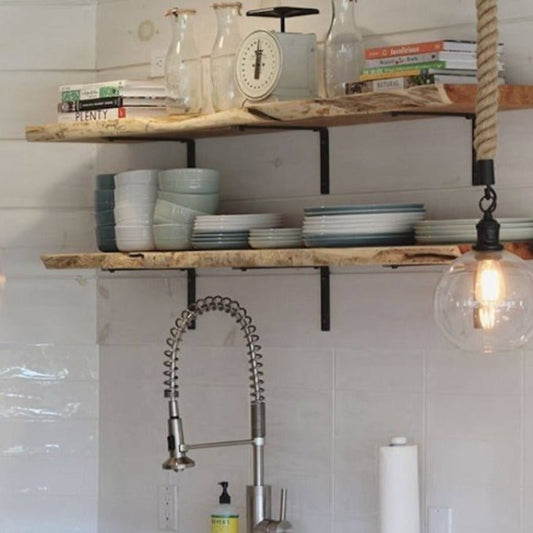
2. Not enough brackets. A shelf with supports only at its ends will have an unsupported span in the middle. As a rule of thumb, shelves over 36" long need at least a third bracket in the center. See our bracket quantity guide for length-based recommendations.
3. Brackets spaced too far apart. Even with the right number of brackets, poor spacing leaves weak zones. Brackets should generally be spaced no more than 24–32" apart, and placed no further than 2–3" from each end of the board.
4. Weak shelf material. Particle board and MDF are prone to bowing under sustained loads — even moderate ones. Thin pine boards have similar limitations. Solid hardwood or plywood are far more resistant to flex over time.
5. Loose or improperly anchored brackets. A bracket that's pulling away from the wall — especially one that's anchored into drywall only, without hitting a stud — creates a tilted support point that leads to shelf lean and sag.

How to Fix a Sagging Shelf
Add a Bracket in the Middle
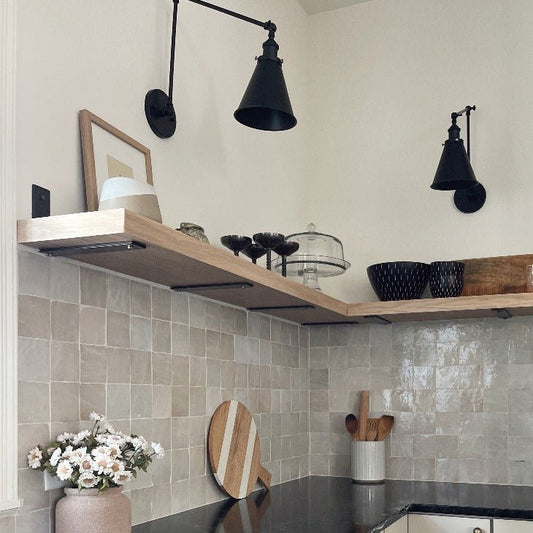
This is the most common fix and works in most situations. If your shelf sag is centered, it almost always means there's an unsupported span that needs a bracket. Add one centered bracket (or two, for very long shelves) and secure it properly into a wall stud or with a toggle bolt if no stud is available.
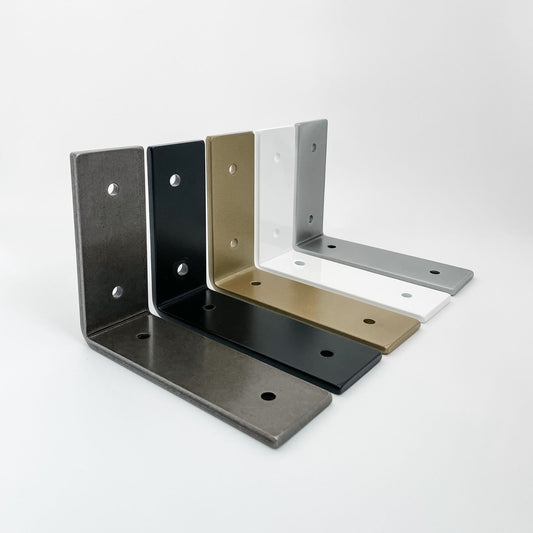
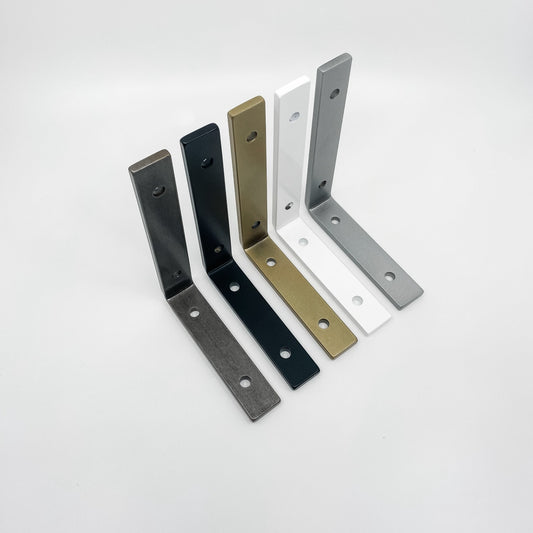
For shelves that already have brackets installed, our Heavy Duty L Brackets can be added mid-span without needing to remove or replace what's already there.
Re-Anchor Loose Brackets
If your brackets are pulling away from the wall or the shelf feels wobbly, the fasteners may have failed. Check each bracket:
- Screws into drywall alone (without studs or toggle bolts) will loosen over time under load
- If screws spin freely, the anchor has failed — switch to a toggle bolt or relocate to a stud
- Lag bolts into studs should be snug; if loose, try a slightly larger diameter lag bolt
See our Installation Guide for fastener recommendations by wall type.
Redistribute or Reduce the Load
Sometimes the simplest fix is moving weight around. Try placing heavier items directly over bracket locations rather than in unsupported spans — the weight transfers more directly into the wall. Lighter decorative items are fine in the middle.
If the shelf is genuinely overloaded for its material and bracket setup, remove some items. No amount of reinforcement will make a particle board shelf hold 80 lbs indefinitely.
Replace the Shelf Board
If the shelf material itself has deformed, especially particle board or MDF that has visibly bowed. Ading brackets won't restore it. The board needs to be replaced.
When choosing a replacement, opt for:
- Solid hardwood (oak, walnut, maple) - strongest and most sag-resistant
- Baltic birch plywood (¾" or thicker) - strong, stable, and more affordable than hardwood
- Avoid particle board for any shelf that will hold real weight
We partner with Nook Woodworking to offer solid wood shelves that pair well with our brackets if you need a ready made option.
Upgrade to Heavy Duty Brackets
Standard lightweight brackets flex under heavy loads even when properly anchored. If your shelf holds cookware, tools, books, or anything substantial, make sure the brackets themselves are rated for the weight. Our Heavy Duty Shelf Brackets are built from solid steel and designed for demanding loads.

Frequently Asked Questions
Can I fix a sagging shelf without removing everything? Often yes — adding a center bracket is usually possible without clearing the shelf if you work carefully. Re-anchoring loose fasteners is even simpler.
My shelf has brackets but is still sagging. What's wrong? The most likely culprits are brackets spaced too far apart, fasteners that have pulled loose from drywall, or a shelf board that has already permanently deformed. Check each of these in order.
Will flipping the shelf board fix it? Temporarily, sometimes — but a board that has sagged once under load will sag again. It's a better long-term solution to fix the root cause (more brackets, lighter load, or a better material).
How much weight can shelf brackets hold? It depends on the bracket, the wall anchoring, and the shelf material working together. See our weight capacity guide for a full breakdown.
Still Not Sure What You Need?
If you're not sure whether your current setup can be reinforced or if it's time to start fresh, reach out to us. We're a small team in Silverton, Oregon and are glad to help you figure out the right fix for your specific shelf.
Related guides: