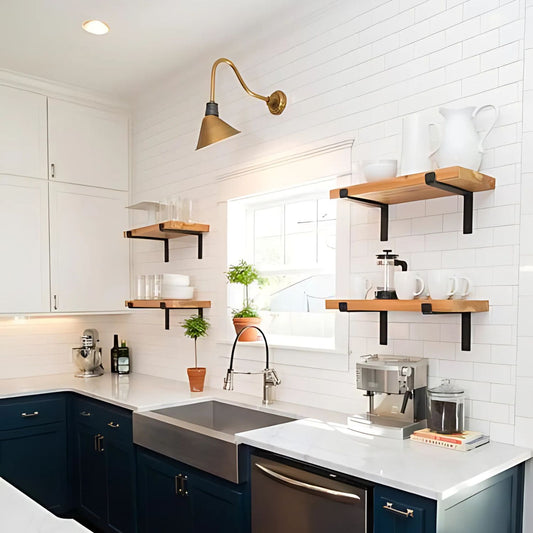
It's one of the most common questions we hear: how many brackets per shelf? The short answer is — it depends on length, material, and load. But don't worry, we've made it easy. Here's everything you need to know.
Quick Reference: Brackets by Shelf Length
Most installers default to two brackets, but that's only correct for shorter shelves. Here are our general guidelines:
| Shelf Length | Brackets Needed |
|---|---|
| Up to 36" (3 ft) | 2 brackets |
| 37" – 60" (3–5 ft) | 3 brackets |
| 61" – 84" (5–7 ft) | 4 brackets |
| 85"+ (7 ft+) | 5+ brackets |
These are guidelines for standard shelf boards. Heavier materials or loads may require additional support.
Why Shelf Length Determines Bracket Count
Two brackets work well for shelves under 36" because the spacing between them stays manageable. There's no unsupported "weak zone" in the middle. As shelves get longer, that gap grows, and without a bracket in between, the shelf board will flex, bow, and sag over time, especially under load.
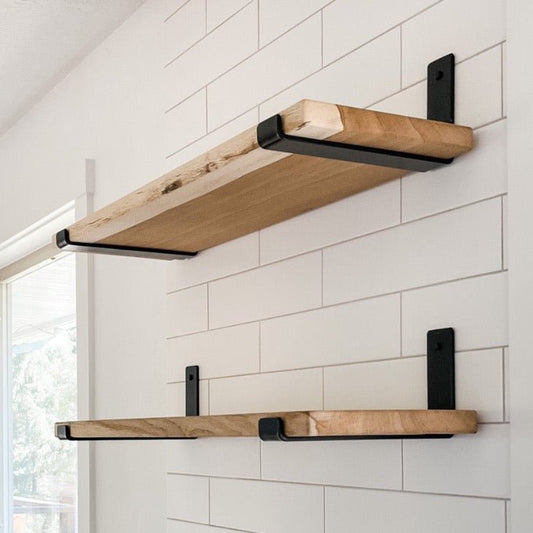
A practical example: a 46" white oak shelf is thick, solid, and heavy. Even though 46" doesn't sound especially long, three heavy-duty J brackets are needed to properly support the full length.
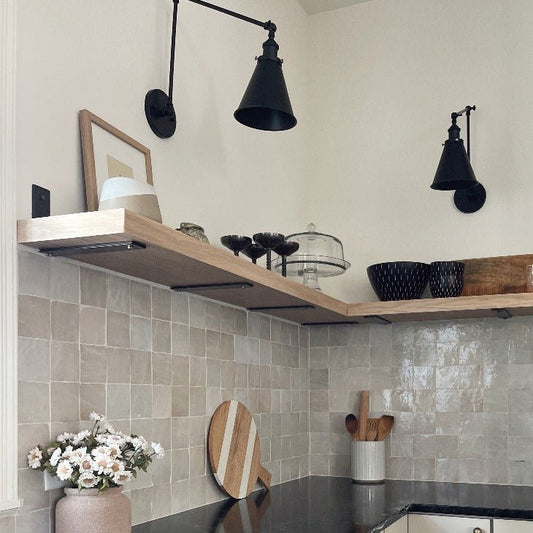
The rule of thumb: brackets should never be spaced more than 24–32" apart, and should be placed no further than 3" from each end of the shelf.
Other Factors That Affect How Many Brackets You Need
Shelf length is the primary factor, but it's not the only one. Consider these before finalizing your order:
Shelf material and thickness. Dense hardwoods like white oak or walnut are heavier than pine or MDF and may need an extra bracket even at shorter lengths. Thin boards are also more prone to flexing.
What you're storing. Decorative shelves holding lightweight items have more flexibility. Kitchen shelves, pantry shelves, or garage shelving holding books, cookware, or tools need more support — both in bracket count and bracket strength.
Shelf depth. Deeper shelves create more leverage on the bracket. If your shelf is over 12–14" deep, make sure your brackets are sized appropriately (bracket arm length should match shelf depth) and consider adding brackets.
Wall anchoring. More brackets also means more anchor points. If you're installing into drywall with toggle bolts rather than studs, spreading the load across more brackets improves overall stability. See our Hardware Guide for stud vs. toggle bolt recommendations.

As an example, these 46" long shelves are supported with three heavy duty J brackets. While they may not seem especially long - they are thick, solid, white oak and need more support down the entire length of the shelf.
Bracket Spacing Tips
- Place the first and last bracket no more than 2–3" from each end of the shelf
- For shelves with three or more brackets, space the middle brackets evenly between the end brackets
- Avoid placing brackets directly over wall outlets or obstacles — adjust spacing slightly rather than leaving a long unsupported span
Frequently Asked Questions
Can I use just 2 brackets for a long shelf if they're heavy-duty? Bracket strength (weight capacity) is separate from shelf sag. Even the strongest bracket can't prevent a 72" shelf from bowing in the middle if there's no support there. Use the length chart above regardless of bracket weight rating.
Does adding more brackets increase weight capacity? Yes — up to a point. More brackets distribute weight more evenly across the wall, which does increase overall load capacity. However, it's not a straight multiplier. The shelf board material, wall fasteners, and bracket size all play a role.
Do these guidelines apply to floating shelves and mantels? Yes. The same length-based guidelines apply to floating shelf brackets, mantel brackets, and standard L-brackets. The bracket style changes the look, but the support principles are the same.
Still Not Sure? We're Happy to Help.
Every project is different — shelf weight, wall type, and room layout all matter. If you're unsure how many brackets you need for your specific install, reach out to us. We're a small, US-based team in Silverton, Oregon, and we love helping people plan their projects right the first time.
Related guides: